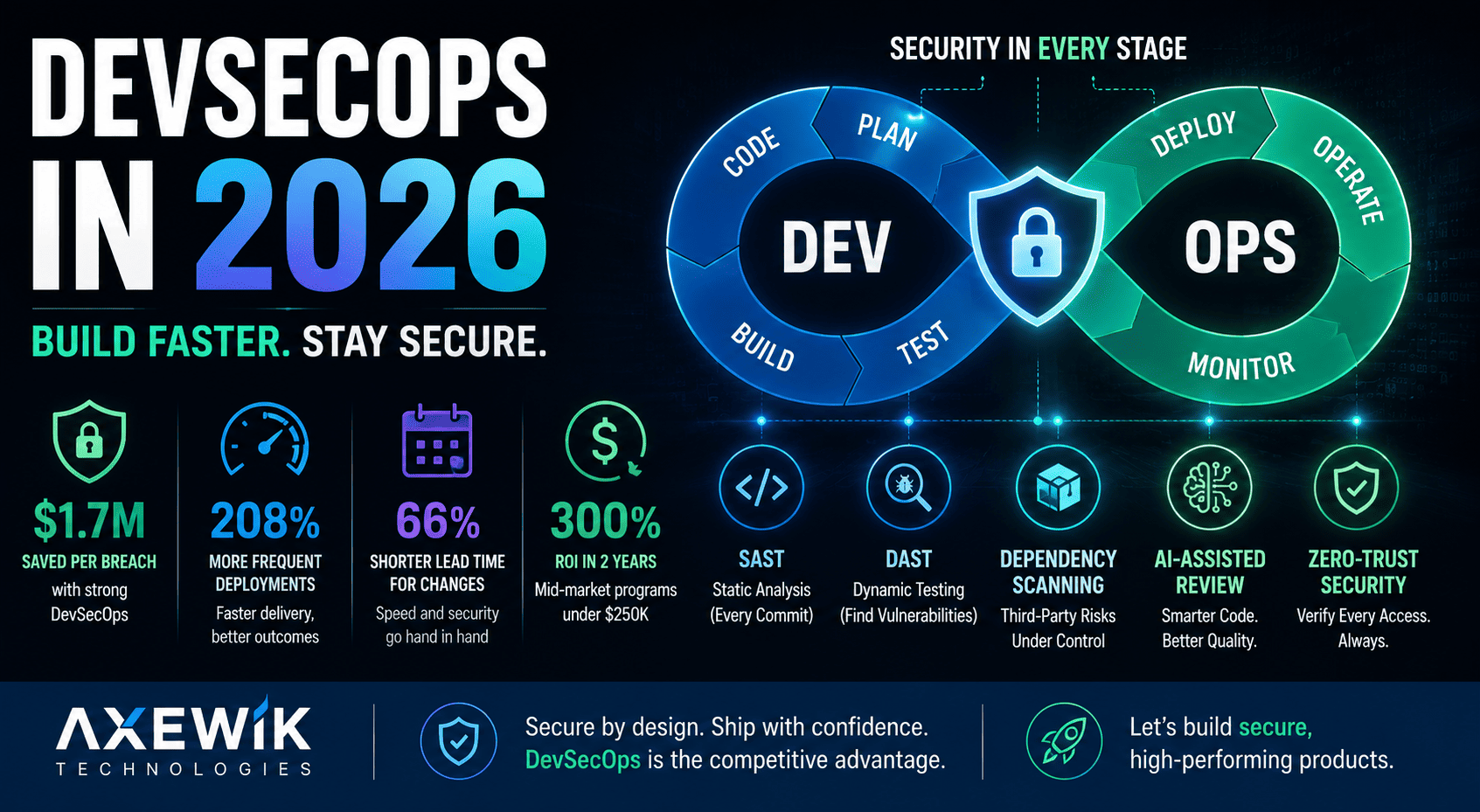
The global DevSecOps market hit $10.88 billion in 2026 (22% CAGR), and adoption has grown from 27% of organizations in 2020 to 36% today. The number that should actually change your roadmap: organizations with high DevSecOps adoption save $1.7 million per breach on average, and mid-market DevSecOps programs typically cost under $250,000 to implement with a documented 300% ROI within two years.
Why This Matters Now - With Real Numbers
- The average global data breach cost is $4.88 million; strong DevSecOps adoption reduces this by roughly 35% ($1.7M in savings).
- DevSecOps is the single top breach-cost mitigator among all measured factors — bigger than AI/ML security insights or security analytics alone.
- Teams using DevSecOps deploy 208% more frequently than low-performing teams, with 66% shorter lead time for changes — security discipline correlates with speed, not against it.
- 30% of breaches now involve a third-party component (double the rate from a few years ago) — dependency scanning specifically has become non-optional.
- Nearly half of teams under deadline pressure still admit to deploying known-vulnerable code — meaning the tooling exists, but discipline under pressure remains the real gap.
What a Real DevSecOps Pipeline Looks Like in 2026
- SAST (static analysis) on every commit — over 50% of DevSecOps-mature teams run this as standard.
- DAST (dynamic analysis) — roughly 44% of mature teams run this alongside SAST.
- Container/dependency scanning — roughly 50% run this, given the rising share of breaches involving third-party components.
- Automation at scale — 96% of security professionals now see clear benefits from automating security/compliance checks; 56% of ops teams are fully or mostly automated.
- AI-assisted review — 75% of teams now use or plan to use AI/ML for code review specifically (up sharply from 41% a few years ago) — but per post #2 above, this needs its own review discipline given AI-generated code's elevated vulnerability rate.
- Zero-trust access architecture — no implicit trust based on network location; every access request verified regardless of source.
What to Avoid
- Treating security as a pre-launch checklist item — median remediation time for known vulnerabilities still sits around 32 days, which is far too slow against patch windows shrinking toward zero for critical issues.
- Choosing a partner who can't name specific tooling (SAST/DAST/dependency scanners) and at which pipeline stage each runs.
- Assuming "we'll add security later" — retrofitting is dramatically more expensive than building it in from day one; the 30-60x cost multiplier for production fixes applies here too.
Build Security Into Your Pipeline From Day One
Retrofitting security costs 30-60x more than building it in from the start. Axewik Technologies' Cloud & DevOps team sets up CI/CD pipelines with automated scanning, dependency checks, and staged rollouts as the default - not an add-on. If your current pipeline treats security as a pre-launch checklist, talk to us → about what a properly secured deployment process would look like for your stack.